
Introduction
Some may recall that I translated this verse late last year. This iteration is different in a couple of places and completely different in one line.
This time, as I read the editions of Effortless Nature side-by-side, I saw that the oldest version (Mawangdui B) differs greatly from the more common, newer WangBi version. I did some research, happened to be rereading Confucious, and discovered that this is likely the result of Confucian/Daoist mish-mashing that happened later!
The line in my first version is “Practice Compassion.” I thought that was cool, if surprising. It makes perfect sense! From a Confucian worldview, “perfected giving accords with heaven,” an overly literal translation of the same line in the older text, is essentially their definition of benevolence. Yet, within the context of Lao Zi’s thought, an entirely different meaning was intended.
Wild!
Translation
The highest virtues are like Water.Water’s virtue is to benefit all things, not strive against them.It rests in places people consider foul.Thus, it is like the Dao.
Live in humility.Deepen the heart-mind.Provide what is needed.Speak the truth.Rule yourself with reason.Serve according to ability. Act following divine timing.
Only through harmony is one blameless.
Commentary
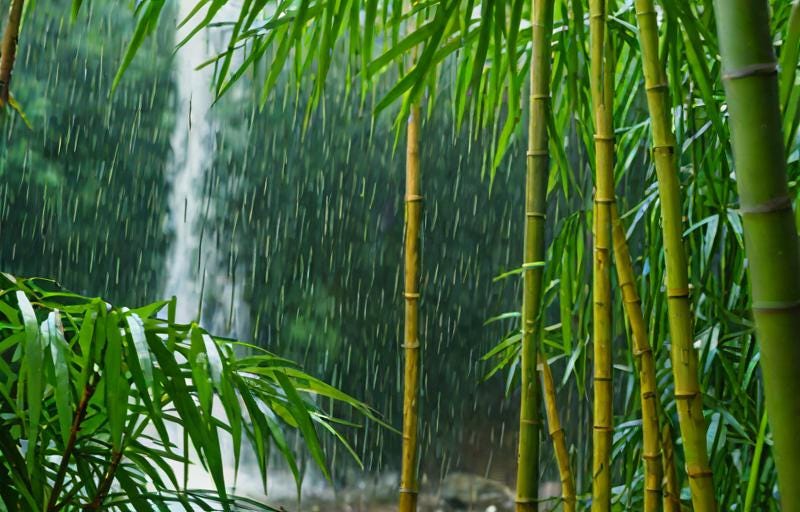
The highest virtues are like Water.Water’s virtue is to benefit all things, not strive against them.
Water is likely the most used metaphor in Weaving the Virtuous Way. If, by some chance, it isn’t, then it is undoubtedly one of the most powerful and notable.